



Pandan slipped into Tokyo cocktails — quietly, then everywhere
Pandan did not arrive in Tokyo cocktails with a brass band. It showed up the way useful bar ingredients often do: folded into one drink, then another, then treated as if it had always belonged between yuzu, melon, tea, shochu, and milk. By the time Tokyo Confidential served a Pandan Nog during its Christmas Confidential pop-up in December 2023, the leaf had already stopped feeling like a novelty.
The leaf behind the soft green note
Pandan is a tropical leaf used across Southeast Asian kitchens, especially in sweets, rice, coconut desserts, and custards. In a glass, it reads less like a herb and more like an aroma: rice, vanilla, coconut husk, toasted grain, sometimes a faint almond edge. That made it useful in Tokyo, where many modern cocktail bars were already fluent in quiet flavors rather than volume.
The point was not to make a drink taste loudly of pandan. Tokyo bartenders used it as a bridge. It could soften rum without turning the drink into a beach postcard, pull melon away from candy, give dairy drinks a steamed-rice warmth, or make shochu feel rounder without adding obvious sugar. Pandan did what a good modifier is supposed to do: it changed the room without standing on a chair.
Tokyo did not need another garnish
The older Tokyo bar grammar was built on precision: hard-shaken sours, carved ice, exact fruit, and service that made a Martini feel like a contract. That language did not disappear. But a newer generation of bars began adding ingredients from kitchens, convenience stores, travel, and immigrant foodways, then treating them with the same restraint usually reserved for citrus oils and bitters.
The SG Club in Shibuya helped normalize that broader pantry. SG Group described the bar as drawing from the first official Japanese mission to the United States in 1860, with the ground-floor Guzzle and basement Sip divided by drinking style rather than by seriousness. Its official materials noted that Sip drew on flavor combinations more often found in fine dining. That mattered because pandan fit better in that world than in a simple list of exotic modifiers.
Bar BenFiddich, in Shinjuku, offered another part of the answer. Hiroyasu Kayama became known internationally for treating herbs, roots, and botanicals as living material rather than backbar decoration. The bar's own site gave only the address and essentials, but coverage of Kayama's work repeatedly centered his farm-to-glass approach and his habit of making drinks around what was in front of him. In that context, pandan was not a gimmick. It was one more aromatic leaf with work to do.
The Tokyo Confidential clue
Tokyo Confidential made the pandan trail easier to see because its drinks traveled. Time Out Tokyo reported that its December 2023 Christmas Confidential pop-up served a Pandan Nog, available hot or cold, with pandan and amazake worked into an eggnog framework. 88 Bamboo covered the same pop-up and listed the drink with bourbon, rum, pandan, amazake, egg, and Christmas spices. The drink sounded festive, but the construction was practical: pandan handled the soft, sweet middle where vanilla would usually sit.
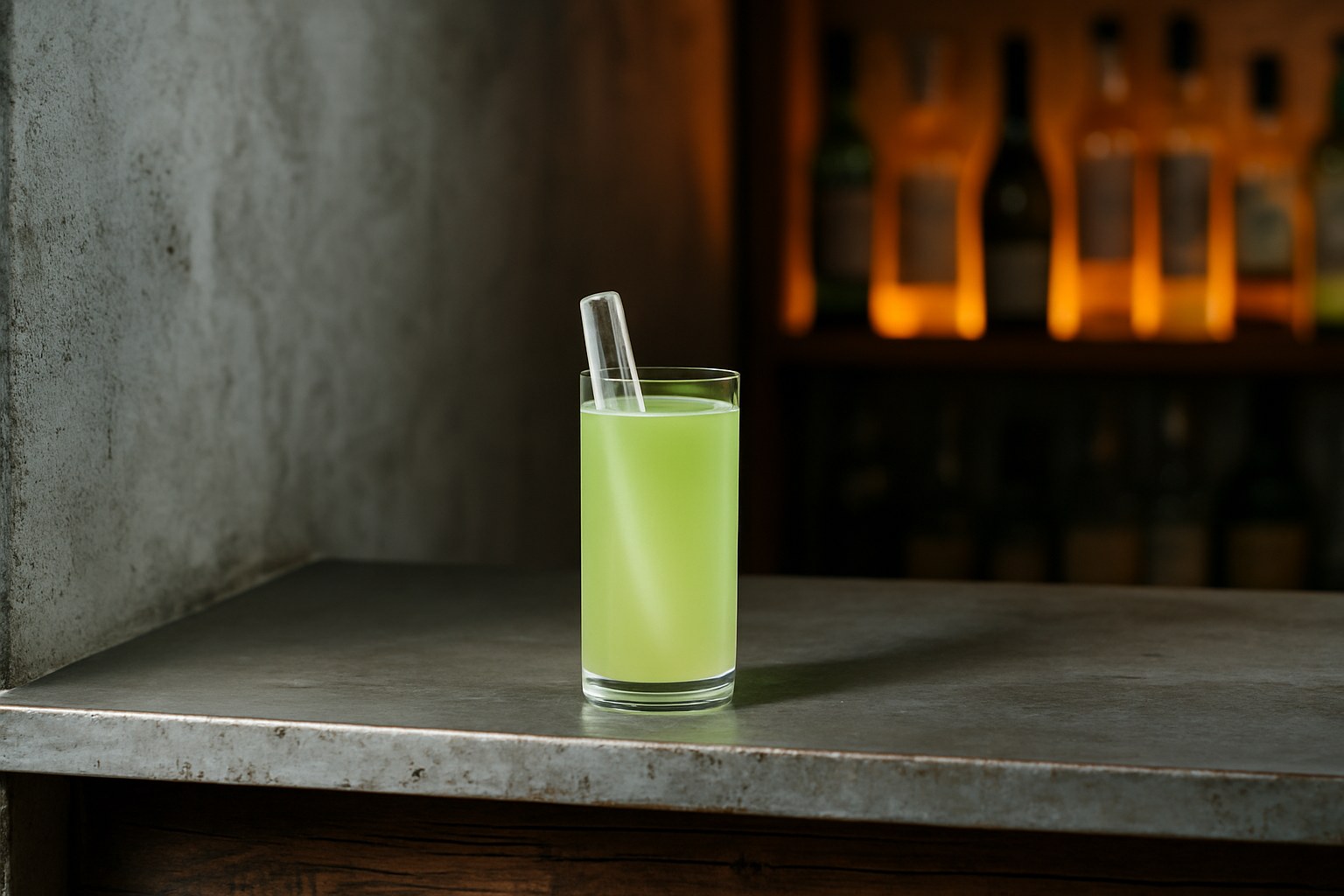
A few months later, Tokyo Confidential's Glass Slipper turned up in coverage of the bar's Rekodo takeover in Sydney. Drinks Digest described it as a carbonated drink with rum, yuzushu, pandan, and fresh melon; Concrete Playground listed the same basic combination as rum, yuzushu, pandan, and melon. Drink Planet also cataloged Glass Slipper as a Tokyo Confidential cocktail by Holly Graham and Waka Murata, noting its melon-and-pandan green profile.
Those appearances did not prove that every Tokyo bar had suddenly become a pandan bar. They did show how the flavor moved: from a seasonal rooftop drink to a travel-ready signature, from creamy winter nostalgia to a carbonated melon highball. A leaf with range is dangerous in the hands of bartenders who dislike wasting a prep batch.
Why it worked in Japanese drinks
Pandan's advantage in Japan was compatibility. It sat naturally next to kome shochu, awamori, barley shochu, and light rum because it shared their grainy, earthy, or cane-adjacent notes. It also liked the acidity of yuzu and sudachi, whose sharpness kept pandan from becoming flat. In highballs, it could be syrup, cordial, tincture, or infusion; in sours, it could sit in the sweetener; in clarified drinks, it could survive the milk-washing process without turning medicinal.
It also made sense beside Japanese dessert references. Amazake, melon soda, castella, milk tea, and convenience-store custards all gave bartenders a local frame for a Southeast Asian ingredient. The best uses did not pretend pandan was Japanese. They let it meet Japanese flavors on the bar's terms, which is more interesting than pretending every green ingredient is matcha.
There was a technical reason, too. Fresh pandan can be hard to source consistently, but frozen leaves, extracts, and house syrups made it manageable. Bartenders could steep leaves into syrup, blend and strain them for a greener profile, or use a light tincture when they wanted aroma without sweetness. The risk was obvious: too much extract made a drink taste like a bakery aisle. Subtlety was not optional.
How to read a pandan cocktail
For drinkers, the easiest question is where the pandan sits. If it is paired with melon, expect brightness and a soft candy-store edge, especially with carbonation. If it is paired with coconut or dairy, expect warmth and body. If it is paired with shochu, tea, or rice, expect something quieter and more savory. The same leaf can make a drink feel tropical, nostalgic, or almost cereal-like depending on the base.
A useful house formula starts with 1 1/2 oz (45 ml) light rum or kome shochu, 3/4 oz (22 ml) fresh lime or yuzu-adjusted citrus, 1/2 oz (15 ml) pandan syrup, and 2 oz (60 ml) chilled soda. Built over clear ice, it should smell like rice and leaf before it tastes sweet. For a richer version, swap the soda for 1 oz (30 ml) coconut milk and shake hard; the drink will need a little more acid to stay upright.
The better Tokyo examples showed restraint. Pandan was not asked to perform Southeast Asia in a glass, and it was not used as green coloring with a passport. It worked because Tokyo's modern bars already valued small aromatic shifts, clean texture, and drinks that changed as the ice moved. The leaf simply found a place in that logic.
That is how ingredients really enter a city: not as declarations, but as habits. One bartender used pandan to round off melon. Another used it to warm an egg drink. Someone else found it made shochu taste deeper. Then, without much ceremony, the green note became part of the modern Tokyo backbar vocabulary.



 Contacts
 Select language
To take part in the dialogue, you need to Log in.