
Login
Sign in
Forgot password?
Enter your information

Please hold your phone upright
Maya Pistola's latest London move was not a new liquid in the narrow sense. It was a May 27, 2026, trade push: a fresh on-trade listing, a run through London spirits shows, and a clearer attempt to make Indian agave legible to bartenders who already had enough tequila and mezcal on the rail.
According to Nicola Carruthers in The Spirits Business, the Goa-produced brand had increased its London presence with a listing at The Perception bar at W London in Soho, after entering the UK market in November 2025 through The Whisky Exchange. The timing mattered because the story was less about another bottle arriving in Britain and more about whether a non-Mexican agave spirit could stand in a category without borrowing too much of Mexico's language.
Maya Pistola is made from wild-growing Agave Americana from India's Deccan Plateau, harvested when the plants reach roughly eight to 14 years old, then distilled, aged, blended, and bottled in Goa. The range cited in the May 27 report included joven at 38% ABV, reposado and anejo at 40% ABV, and extra anejo at 48% ABV. Those numbers put the liquid in familiar bartender territory, but the legal and cultural address is different: it is not tequila, and it is not mezcal.
The brand used the term "agavepura" for spirits produced outside Mexico from 100% agave and without additives. That was useful, if slightly engineered. Spirits categories often begin with a word nobody likes saying out loud, then either earn it through repeated use or watch it die on the shelf. I am wary of new category names until bartenders start using them when no brand person is in the room.
The founder context helped. In a January 2026 Spirits Business podcast interview with editor-in-chief Melita Kiely, Rakshay Dhariwal spoke about coming from hospitality rather than from a conventional distilling background, including his work with Pass Code Hospitality and India Cocktail Week. The brand also had corporate muscle behind it: Diageo's United Spirits bought a minority stake in Maya Pistola's parent company, Inspired Hospitality, in April 2024, according to The Spirits Business.
The May push put Maya Pistola in three very different London rooms. It appeared at The Whisky Exchange's Tequila & Mezcal Show from May 14 to 16, then at London Wine Fair from May 18 to 20 as part of The Global Spirits Masters showcase. It was also included in Millie Milliken's tasting session, "Agave on Fire: This Spirits Category Just Keeps Innovating," according to the same Spirits Business report.
That circuit was practical. Trade shows are not romantic, but they show whether a liquid survives lukewarm pours, distracted buyers, and the blunt math of backbar space. A spirit with a new category term has to do more work than a bourbon or gin. It has to explain itself quickly without sounding like a geography lesson.
The more useful development was the bar placement. The Perception bar at W London in Soho put Maya Pistola on its agave menu, which meant the bottle was being read beside Mexican spirits rather than hidden in a world spirits corner. The House of Decant in Mayfair also hosted a guided Maya Pistola tasting on May 19, 2026, led by Rakshay Dhariwal, according to the venue's event listing. Those are not equivalent signals: a tasting explains a bottle; a menu placement tests whether the bottle can sell when nobody is giving a speech.
Public tasting notes on the line pointed toward a spirit with cooked agave, coffee, honey, nutty caramel, toffee and pepper in the reposado, while the anejo was described by London Spirits Competition materials as floral and peppery, with coffee, cinnamon, nutmeg and an herbal edge. Awards copy tends to sand down roughness, but those notes tracked with a broader idea: this was agave filtered through Indian growing conditions and a barrel program, not an attempt to mimic blanco tequila's clean snap.
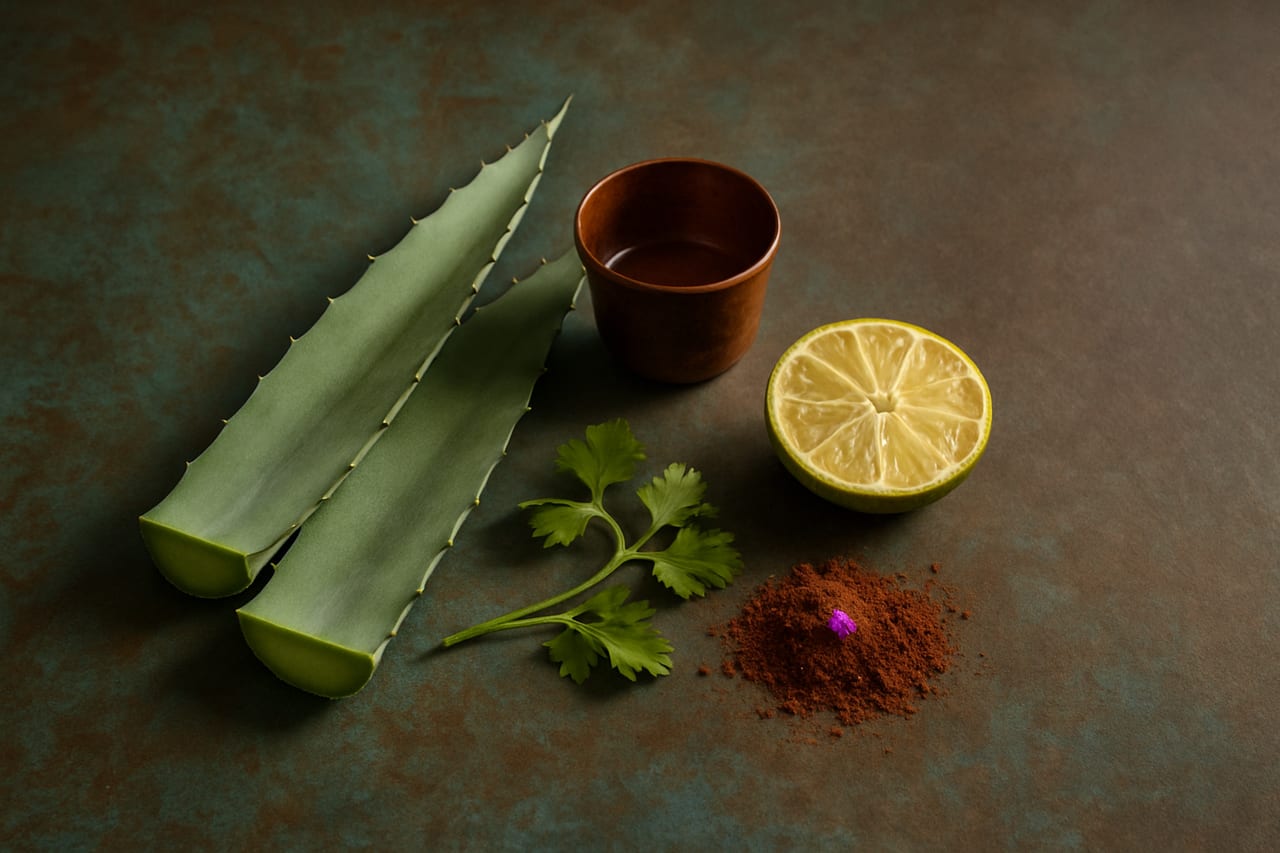
That mattered in cocktails. In a February 2026 Spirits Business cocktail roundup, the Maya Pistola Picante was listed with 1.5 oz (45 ml) aged Indian agave spirit, 1.5 oz (45 ml) pineapple juice, 0.67 oz (20 ml) lime juice, 0.5 oz (15 ml) agave nectar, 0.17 oz (5 ml) jalapeno brine, pickled jalapenos and fresh coriander, shaken and strained into a Tajin-rimmed glass. On paper, that drink smelled green first: coriander stem, jalapeno vinegar, then ripe pineapple. The first sip would hit sweet-sour before the chili arrived; the mid-palate would move into cooked fruit and pepper; the finish would be saline, warm, and a little sticky unless the shake brought enough dilution. The color would sit pale gold to cloudy yellow, with a soft texture from juice and nectar rather than the lean snap of a Tommy's Margarita.
That kind of build made sense for a new agave-adjacent bottle because the drink did not ask the spirit to behave like a fragile sipping mezcal. It gave the base heat, acid, salt and fruit, then watched whether the agave character survived. In good bars, survival is the first audition.
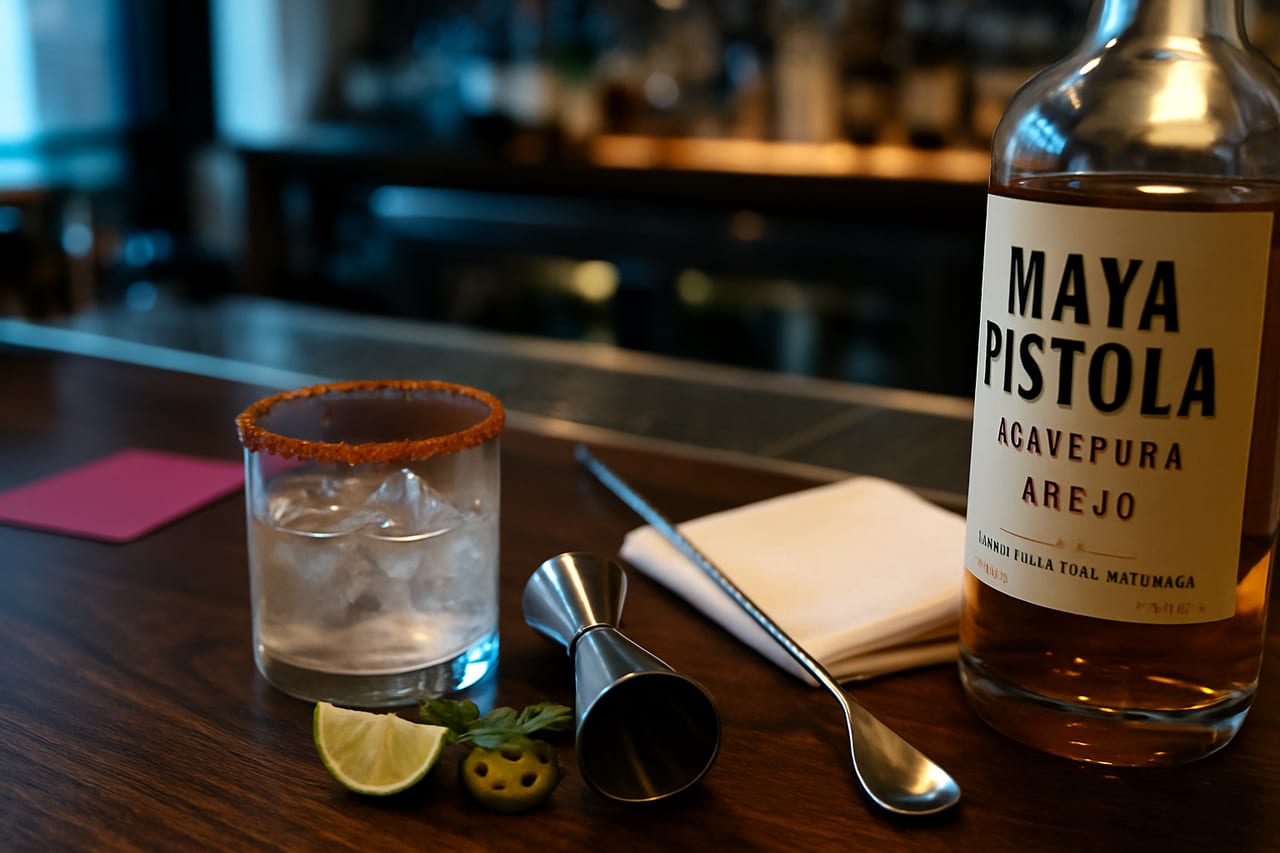
The public record around London use was still thin in one important way: recent coverage named the venues more clearly than it named the bartenders pouring the liquid. The Perception at W London in Soho was identified as the new agave-menu listing, and The Pine Bar at The Biltmore Mayfair appeared in the same February Spirits Business recipe feature for a separate cocktail, but individual bartender attribution around the Maya Pistola serve was not publicly attached in those sources.
That absence matters editorially. Bartender adoption is not the same as brand distribution. A bottle can be listed because a buyer liked the margin, because a supplier pushed it, or because a bartender found a drink where it made sense. Those are different stories. The strongest version of Maya Pistola's London argument will come when a named bartender in Soho, Mayfair, Shoreditch or Marylebone can explain why the reposado belongs in a specific house drink instead of simply replacing tequila.
Still, the early bar logic was visible. The joven could work where a drink needed greener agave and less oak. The reposado made more sense in sours, picantes and highballs where pineapple, lime, ginger, chili or coriander could pull out its cooked-agave and pepper notes. The anejo and extra anejo were more likely to sit in stirred drinks, where barrel spice and coffee tones had room to show. Garnish should stay structural here — salt, citrus oil, coriander, maybe a restrained chili note — because a crowded glass would flatten the point.
Maya Pistola's London push landed at a moment when agave shelves were already crowded, but not necessarily broad. British bars had tequila for speed, mezcal for smoke, celebrity bottles for tourists, and serious small producers for drinkers who knew what they were asking for. Indian agave entered that room with a different proposition: not cheaper imitation, not Mexican heritage, and not a neutral base with a pretty label.
The risk was obvious. "Agavepura" could become another brand-owned term that bartenders politely repeat at tastings and quietly drop during service. The opportunity was just as clear. If non-Mexican agave spirits are going to exist in serious bars, they need a vocabulary that does not steal Mexican denominations and does not hide behind vague "world spirit" shelving.
Maya Pistola did not solve that in London in May. It did, however, put the question in front of the right people: buyers tasting quickly, bartenders thinking in specs, and drinkers who might recognize agave before they recognize the map. Categories are not built by press notes. They are built when the second pour is easier to explain than the first.





 Contacts
 Select language
To take part in the dialogue, you need to Log in.
To take part in the dialogue, you need to Log in.